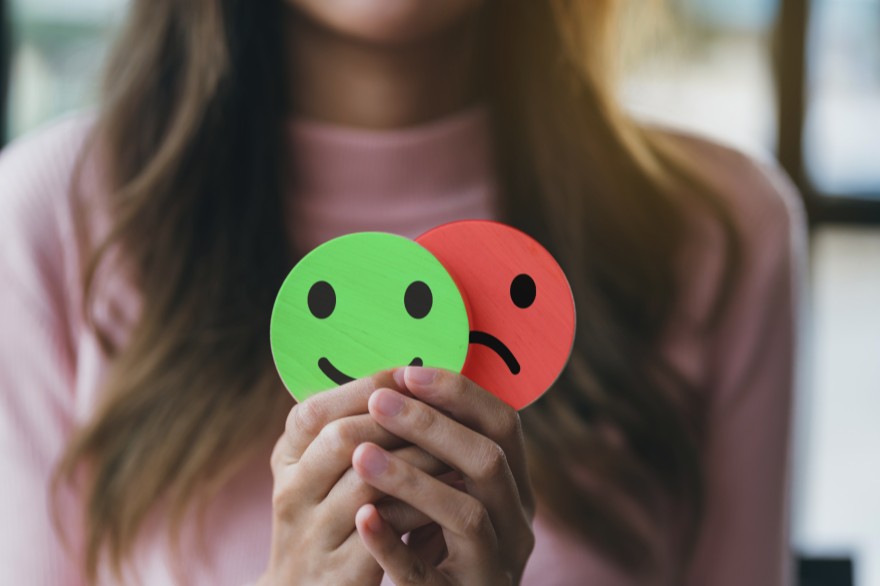
The general public and mental health professionals alike have an increasing awareness of mental health and its role in daily living in the late 2020s.
We now know and understand more factors behind what constitutes mental health than ever before. We've also brought mental health further into the open for acceptance and treatment as an integral to human wellness.
At this juncture, many of us may likely recognize that mental health can be influenced by aspects such as:
| personality | drug/alcohol use | sleep quality |
| friend & family relationships | screens & social media | fitness & exercise |
| financial circumstances | abuse or neglect | divorce |
| diet | genetics | loss or bereavement |
For those of us in Oswego, Aurora, Plainfield and Naperville (IL), these are just some of the elements that can shape our mental framework. They often combine as well. Our mental health emerges from interactions among social, behavioral, psychological, environmental and biological components.
As we continue evolving in mental health research and treatment, the biological roles of our hormones in our thoughts and behaviors will remain an area of notable relevance.
Hormones are chemical couriers that help the brain and body communicate. They are produced by endocrine glands and other tissues and released into the bloodstream.
As they move through and bind to receptors in target tissues, they can carry messages throughout the body, including back to the brain. In this way, they help to coordinate communication between the brain and the body.
Our hormonal systems operate through feedback loops that continually adjust signaling to maintain homeostasis (a relatively stable state of equilibrium within interdependent elements of an organism).
Hormones factor into mental health because they can affect how we think, feel, sleep and function. At the same time, stress, behavior, relationships and health conditions can influence the systems that regulate hormones.
Hormonal health isn't simply a matter of having more or less of a particular hormone. It involves:
| appropriate hormone levels & timing | age |
| receptor sensitivity | sex |
| interactions among hormones | stage of reproductive life |
For example, because hormones circulating through the body affect tissues containing appropriate receptors, a single endocrine disturbance can potentially produce symptoms involving several systems at once.
Thyroid dysfunction > brain + heart + gastrointestinal system + muscles + reproductive system + metabolism
This helps explain why endocrine disorders can sometimes at first appear psychiatric, neurological, reproductive, gastrointestinal or metabolic.
Certain hormones can play important roles in mental health as well as the body's responses to internal and external circumstances. The following are some of the hormones with notable roles in these processes.
| Hormone | Cortisol |
| Origin | Adrenal cortex |
| Notable functions | Stress response, metabolism, glucose availability, blood pressure |
| Abnormally low | Severe fatigue, weakness, dizziness, low glucose, low mood |
| Abnormally high | Poor sleep, weak muscles, central weight gain, anxiety, depression |
| *Note stress & fatigue do not automatically indicate an abnormally high cortisol level | |
| Hormone | Estrogen/Estradiol |
| Origin | Primarily the ovaries during reproductive years |
| Notable functions | Reproduction, menstruation, bone health, sexual health & function |
| Abnormally low | Hot flashes, night sweats, menstrual changes, bone loss, sleep disturbance |
| When elevated | Breast tenderness, fluid retention, heavy/irregular bleeding, mood changes |
| *Note hormonal change & sensitivity can sometimes matter as much as absolute hormone levels | |
| Hormone | Testosterone |
| Origin | Ovaries, adrenal glands, peripheral conversion (women); testes (men) |
| Notable functions | Sexual function, muscle/bone health, aspects of energy & well-being |
| Abnormally low | Lower libido/arousal, energy, muscle strength |
| Abnormally high | Acne/oily skin, thinning scalp, irregular periods |
| Hormone | Oxytocin |
| Origin | Mainly hypothalamus, peripheral release through posterior pituitary |
| Notable functions | Childbirth, sexual response, social bonding, attachment, social recognition |
| Related to release | Safe & affectionate touch, sexual intimacy, breastfeeding, parent-child bond |
The neurotransmitters serotonin and dopamine also deserve mention because of the interactions between the nervous and hormonal systems.
Serotonin is involved in mood, sleep, appetite and cognition. Dopamine plays roles in motivation and reward, attention, learning, movement and reinforcement.
Understanding hormones within our psychobiological selves gives us further insight into how the body keeps score of what is going on inside and around us.
One hormone might influence another, which can in turn affect neurotransmitter activity and help shape how our brain responds to a situation. That response might determine if we act on something, avoid it or experience emotions such as excitement or stress.
The body's response to a situation can then feed back into the system, potentially modulating the release and activity of hormones and neurotransmitters.
Let's imagine a woman in a committed relationship. They are having a conversation alone at her house. Her partner slides over to the chair and gently places his hand on her arm.
The physical contact may promote oxytocin release, reinforcing her sense of bonding and connection and potentially affecting dopamine activity. Her body becomes even more relaxed and the conversation continues.
Now let's imagine the same woman in the same conversation. At one point, her partner doesn't like what's being discussed. He stands up and looms over her with balled fists at his sides.
This sign of aggression can activate her stress response, promoting the release of hormones such as cortisol and adrenaline. Because he has acted this way before, her response system may have been sensitized to the threat, causing her body to respond more readily when she perceives similar signs of danger.
He raises his voice at her, causing her body's danger alert to intensify. Her pulse and breathing quicken. When he finishes speaking and leaves the room, she remains alert until she perceives the danger has passed. Her stress response then begins to subside, leaving her physically and emotionally fatigued.
If this relationship includes established toxic patterns, the woman's neural and hormonal systems may become increasingly conditioned to respond to those patterns. Over time, this consistent stress response could contribute to mental-health difficulties.
In a simplified way, we might consider mental health and illness as involving a sequence such as:
Experiences/Environment > brain & nervous system > neurotransmitters > hormones > brain & body
This represents an elaborate system of communication and feedback among our brain, body, psychological experiences and environment. Changes within any component can ripple through the others, potentially affecting:
| social behavior | executive functioning |
| attention | sexual functioning |
| stress responses | memory |
| emotion regulation | sleep |
| energy & motivation | appetite |
Let's return to our scenario in the previous section. During therapy, it's revealed the woman grew up with emotionally and physically distant parents. This may have shaped how her nervous system learned to respond to closeness, affection and perceived rejection.
It's possible those learned patterns influenced her expectations of intimacy and contributed to patterns in her romantic relationships.
Over time, repeated exposure to stressful relationships may have also programmed how her nervous system responded to subsequent stressors, potentially contributing to fatigue, disrupted sleep, anxiety and mood changes.
The sequence of her mental health may have developed more like this:
Early experiences > learned attachment/relationship patterns > nervous-system responses to intimacy/threat > hormones/neurotransmitters > behavior & emotions > subsequent experiences
Consequently, instead of a sequence such as:
Affection > bonding/relaxation > neurochemical activity
She may have established one such as this:
Perceived threat > stress-system activation > adrenaline & cortisol > heightened alertness > recovery/fatigue
As we've alluded to, hormonal irregularities can cause, mimic, aggravate or coexist with psychiatric symptoms. For example:
Hypothyroidism > fatigue + cognitive slowing + depression + insomnia
A symptom can be psychologically experienced without being exclusively psychologically caused. For this reason, wellness and self-care ask what is happening across the entire system rather than define a symptom as hormonal or psychological.
If a person struggles with abnormal rage due to PTSD, there could be a sequence of hormones and neurotransmitters informing one another and prompting physiological reactions. These responses might shape the environment, or the environment might be shaping them.
At the same time, these experiences and responses can become part of learned patterns that influence how a person responds to future situations.
For such reasons, Supporting healthy hormonal regulation can potentially contribute to overall mental health. For instance, if a person in therapy gains the insight and skills to add more physical affection to a relationship, this may release more oxytocin within that person, encouraging bonding, which favors mental health and a sense of safety.
For those of us in Oswego, Aurora, Plainfield and Naperville, we can promote healthy hormone regulation on our own through steps such as:
| consistent proper sleep | maintaining healthy personal boundaries |
| proper nutrition | recognizing safe & positive relationships |
| regular movement & exercise | engaging social connections |
| reducing & managing stress | being affectionate toward others |
Individual therapy can be a meaningful part of a whole-person health plan. Through therapy, a person can discuss, explore and discover aspects of their lives and experiences in seeking to better understand and perceive them.
Within a safe, calm, private environment, the individual can develop knowledge and tools for positive coping mechanisms that can help balance the stress-response system.
For example, the individual in therapy might come to recognize a sequence such as:
Trigger > physiological response > emotion (e.g. anger, fear, shame) > thought/meaning > behavior
Such awareness can create opportunities to intervene earlier in that sequence. Internal thoughts and questions can be reshaped in processing experiences.
Former question: How do I make myself stop doing this?
New question: Why does my system respond this way?
Former thought: I feel afraid and I shouldn't. Something's wrong with me.
New thought: This response makes sense given what I now understand.
This can help create room for change without requiring the person to invalidate their original thought or experience. In turn, the individual can develop greater personal agency and perceived self-control, as well as distinguish actual circumstances from learned alarm responses.
Empowered Life Therapy believes in living as the authentic self in emotional safety, strength and clarity. If you or someone you care about in Oswego, Aurora, Plainfield or Naperville (IL) would like to discover more about our individual therapy as part of integrated personal care, we welcome your inquiry. Simply contact us at (630) 383-9999.
 Kasey Huff
